

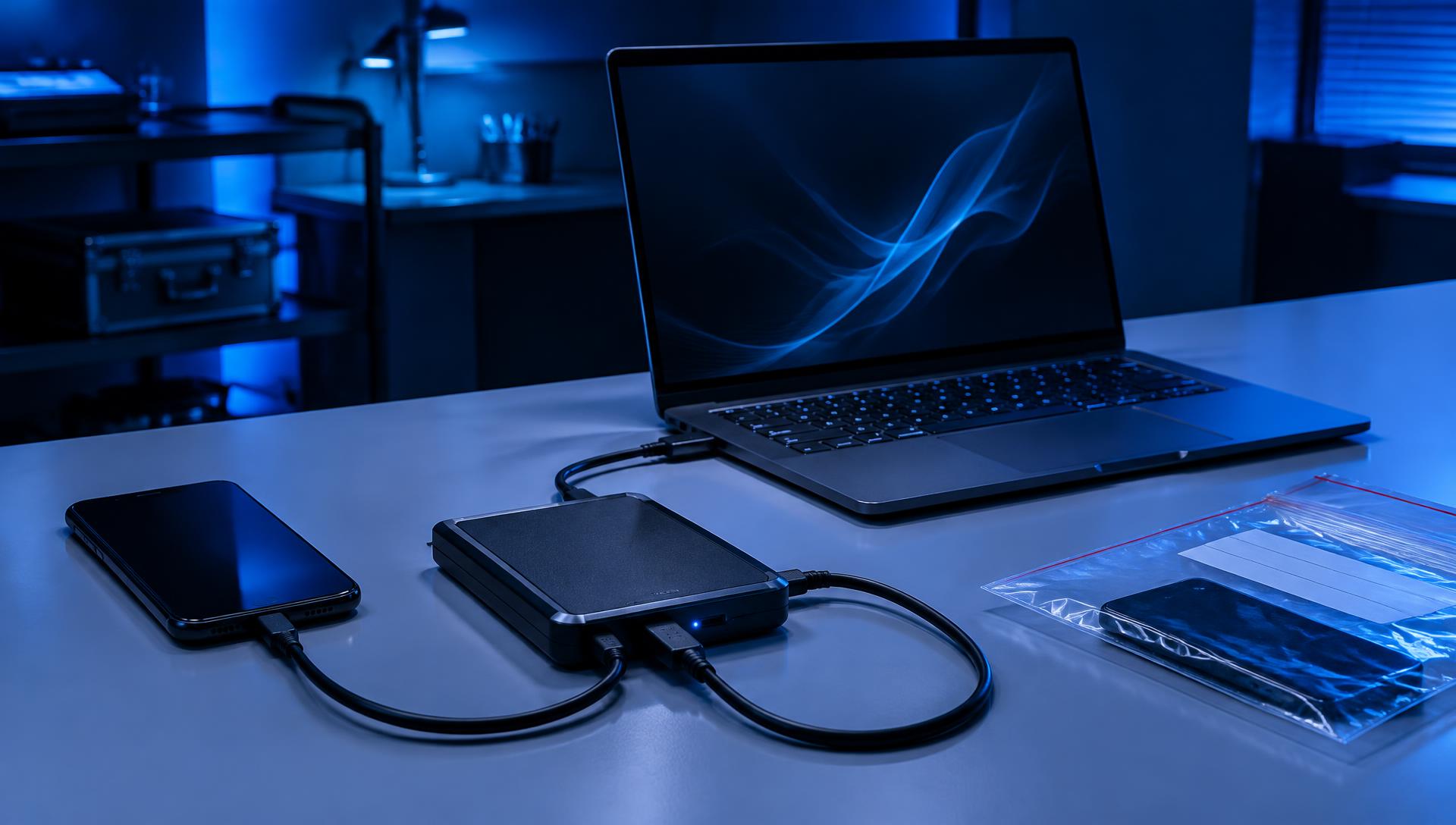
When trust is questioned in a business or personal matter, devices often hold the most direct record of what happened. Messages, files, documents, logins and timestamps can confirm an account, contradict it, or show that something was changed after the fact. A forensic examination is the disciplined way to find out, but only when it is authorised and the questions are clear.
Authority comes first
Before any examination, we confirm that there is lawful authority for the specific device, the accounts and data on it, and the purpose of the examination. Owning a device is not, on its own, authority over every account or piece of data it can reach. Depending on the matter, the assessment may need to consider the informed consent of the user, employment and workplace surveillance obligations, privacy law, any applicable policies, and whether a legal process such as a court order is more appropriate. That assessment is made case by case, and we will ask you to obtain legal advice where it is unclear.
We do not access devices or accounts belonging to someone else without that authority, and we do not install monitoring software or recover passwords to get into another person's accounts. Covert access is unlawful in many circumstances, can expose the person who arranged it to serious consequences, and can create real difficulties for how any material obtained is later treated.
What an examination can establish
Within those limits, a properly conducted examination can often establish:
- What is on the device: documents, messages, images, email, application data and browsing records present at the time of acquisition.
- Timelines: when files were created, opened, modified or transferred, and when particular applications or accounts were in use, subject to the reliability of the underlying records.
- Movement of information: whether files were copied to external storage, uploaded to cloud services or sent by email or messaging.
- Deletion and recovery: whether some deleted material can be recovered and, sometimes, indications of when deletion occurred.
- Consistency: whether the digital record supports or contradicts the accounts given by the people involved.
What it cannot establish on its own
Devices record activity, not intention. An examination can show that a file was copied from a particular account at a particular time. It usually cannot, on its own, prove who was physically using the device or why. Shared devices, shared passwords and synchronised accounts all complicate attribution.
Recovery is never guaranteed. Modern phones and computers encrypt storage and overwrite deleted data quickly. Some applications keep little or nothing locally. A responsible examiner will tell you early what is realistic for the device and question in front of them.
Why preservation matters
The most common way evidence is lost is well-meaning interference: someone scrolls through a phone, forwards messages to themselves, resets a laptop for reissue or runs a clean-up tool. Each action changes the record and can make later findings harder to defend.
If you control a device that may matter, the safest steps are usually to stop using it for that purpose, keep it charged and secure, record who has handled it, and seek advice before anyone looks through it. A forensic image (a verified copy) lets the examination proceed without altering the original.
Framing the right questions
An examination is most efficient when it is driven by specific questions, such as "Were these client files sent outside the business before the employee resigned?" rather than "Find anything suspicious." Clear questions keep the work proportionate, respect the privacy of unrelated material and produce findings that can be explained to a decision-maker or a lawyer.
Reporting findings
A sound forensic report explains how the device was acquired, how integrity was verified, what was examined, what was found and the limits of those findings. It should be written so that a non-technical reader can follow the reasoning, and so that another examiner could check the work.
For background on the scientific basis and limits of digital forensic techniques, see the NIST scientific foundation review of digital investigation techniques (an independent reference, not an endorsement of our work). Whether any particular material is admissible in proceedings is decided case by case.
Learn more about our digital forensics work and our civil and personal matters.
Speak with us confidentially
Every matter starts with a confidential conversation. We clarify the objective, assess the work required, and agree the scope and fees before work begins. Make a confidential enquiry or book a time to talk.
This article is general information, not legal advice. Before any examination we confirm lawful authority for the specific device, accounts, data and purpose. Device ownership alone is not necessarily sufficient; consent, employment and privacy obligations, and legal process may all be relevant, and each matter is assessed on its own facts. Whether material is admissible in legal proceedings is decided case by case. Obtain legal advice about your own circumstances.