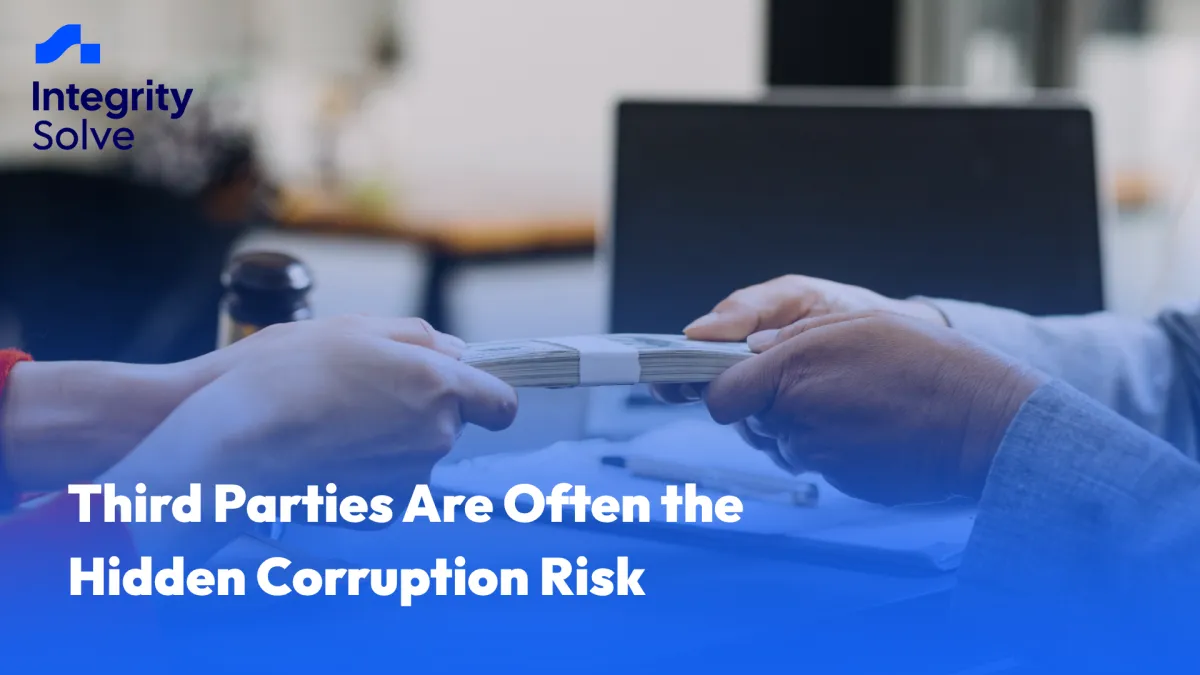
Third Parties Are Often the Hidden Corruption Risk
Many organisations focus their corruption controls on employees. That is necessary, but often incomplete.
Some of the most serious integrity failures emerge through third parties: local agents, consultants, introducers, distributors, brokers, customs facilitators, subcontractors, and joint venture participants. These relationships can create distance between the organisation and the conduct, but they do not remove exposure.
If a third party is being used to secure influence, channel value, conceal relationships, or avoid internal controls, the risk remains very real.
Why third parties create hidden exposure
Third-party relationships can appear commercially ordinary while carrying elevated corruption risk beneath the surface. Warning signs include:
vague service descriptions
success-fee structures with weak transparency
requests for unusual payment methods
politically connected owners or associates
use of layered entities with unclear beneficial ownership
resistance to due diligence or documentation
These issues do not prove misconduct, but they should change the level of scrutiny.
Why businesses underestimate the risk
There are several reasons organisations underestimate third-party corruption risk:
1. Commercial urgency overrides caution
If a third party is seen as the key to market access, licensing, referrals, approvals, or local introductions, businesses can become too willing to accept uncertainty.
2. Onboarding is treated as administration
When due diligence is reduced to document collection, deeper questions about influence, ownership, and purpose often go unasked.
3. Accountability is fragmented
The business sponsor may focus on revenue. Procurement may focus on onboarding steps. Compliance may only see a slice of the relationship. Without joined-up ownership, important warning signs can be missed.
What stronger anti-corruption control looks like
A stronger approach includes:
proportionate due diligence before engagement
look-through ownership and control analysis
screening for sanctions, regulatory, and adverse information exposure where relevant
scrutiny of services, fees, and payment pathways
contractual integrity expectations
ongoing review where the risk profile warrants it
Crucially, anti-corruption controls should be risk-based. A low-risk local supplier does not require the same depth of review as a politically connected intermediary operating in a higher-risk environment.
The importance of documentation
If a regulator, board, investor, or enforcement agency later reviews the relationship, the organisation should be able to explain why the third party was engaged, what checks were done, what risks were identified, and why the relationship was approved.
Poor documentation makes even defensible decisions harder to support.
Final word
Third parties are often the hidden corruption risk because they sit at the intersection of commercial pressure, limited visibility, and outsourced influence.
Organisations that take integrity seriously do not stop at internal controls. They examine who acts on their behalf, how those relationships are structured, and whether the evidence supports trust.